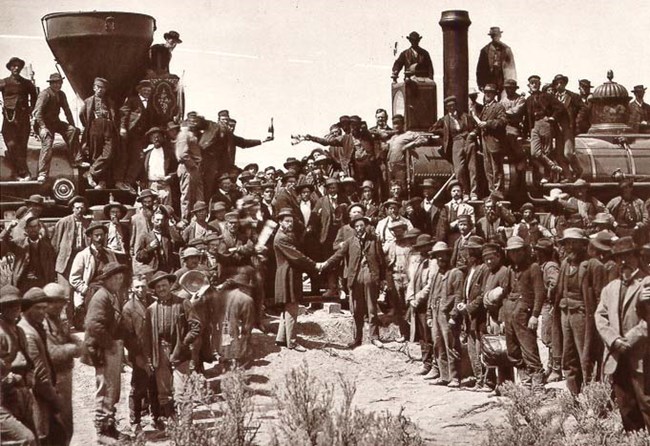
The year was 1869 and it was a warm Spring day on the 10th of May. The Presidents of both the Union Pacific and Central Pacific Railroads met at Promontory Point, near Ogden, Utah and placed the last railroad spike joining their two railroads and opening the first transcontinental rail line. Its construction was considered to be one of the greatest American technological feats of the 19th century. Known as the “Pacific Railroad” when it opened, it served as a vital link for trade, commerce, and travel and opened up vast regions of the North American heartland for settlement.
The railroad played a significant role in the development of Ogden and the entire State of Utah. However, I believe it’s important to understand how we got to that point.
The steam engine first appeared in 1830 and over the next couple of decades, railroad tracks linked numerous cities together on the East coast. By 1850, over 9,000 miles of track had been laid East of the Missouri River. Settlers began expanding West, increasing significantly as gold was discovered in California in 1848.
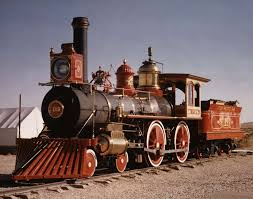
Although actual construction of this endeavor took seven years, the dream of this railroad began forming in the minds of entrepreneurs as early as 1845 when Asa Whitney presented a proposal to Congress of a federally funded railroad reaching to the Pacific. Several years of lobbying failed, but the idea remained.
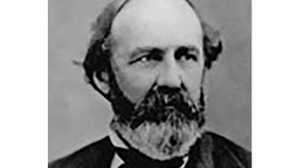
In 1860 an engineer named Theodore Judah identified Donner Pass in Northern California as the ideal location to construct a rail line through the Sierra Nevada mountains. By 1861 he had convinced several investors into establishing the Central Pacific Railroad Company and headed to Washington DC where he met with Congress and President Abraham Lincoln. He persuaded them to pass the Pacific Railroad Act.
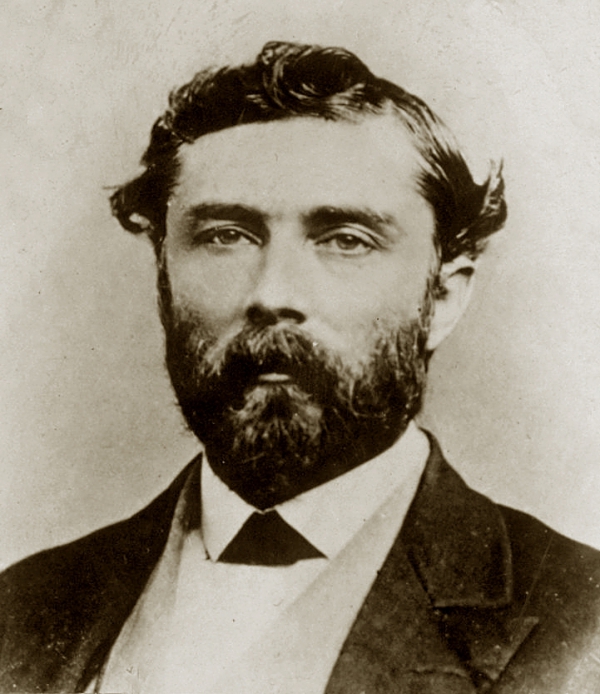
The Pacific Railroad Act stated that the Central Railroad Company would begin construction on a rail line from Sacramento, California, heading East across the Sierra Nevada mountains. A second company, the Union Pacific Railroad would begin building a rail line from the Missouri River at the Iowa-Nebraska border and head westward.
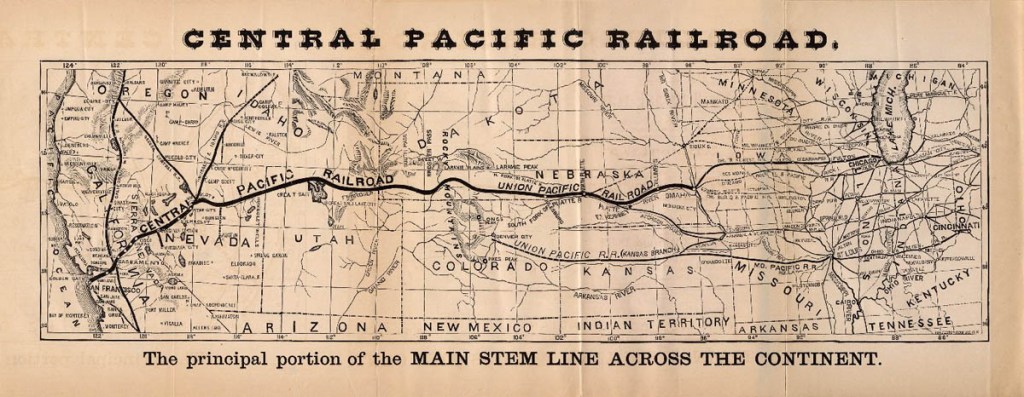
The tracks would meet somewhere in the middle at an undetermined destination. The terms of competition between the two rail companies were established with them initially receiving 12,800 acres of land each and $48,000 in government bonds for every mile of track laid. Before it was done, the Union Pacific received 13 million acres.
Until the completion of the transcontinental rail line, travel to California was accomplished via one of three methods. There was the overland journey across, plains, mountains, deserts and rivers which was risky and difficult. Another method was to sail for six months by sea around Cape Horn in South America or crossing through the isthmus of Panama, risking yellow fever and other illnesses.
Theodore Judah never saw the completion of his dream as he contracted yellow fever and died in November of 1863, just after the first rails were laid in Sacramento by the Central Pacific Railroad Company.
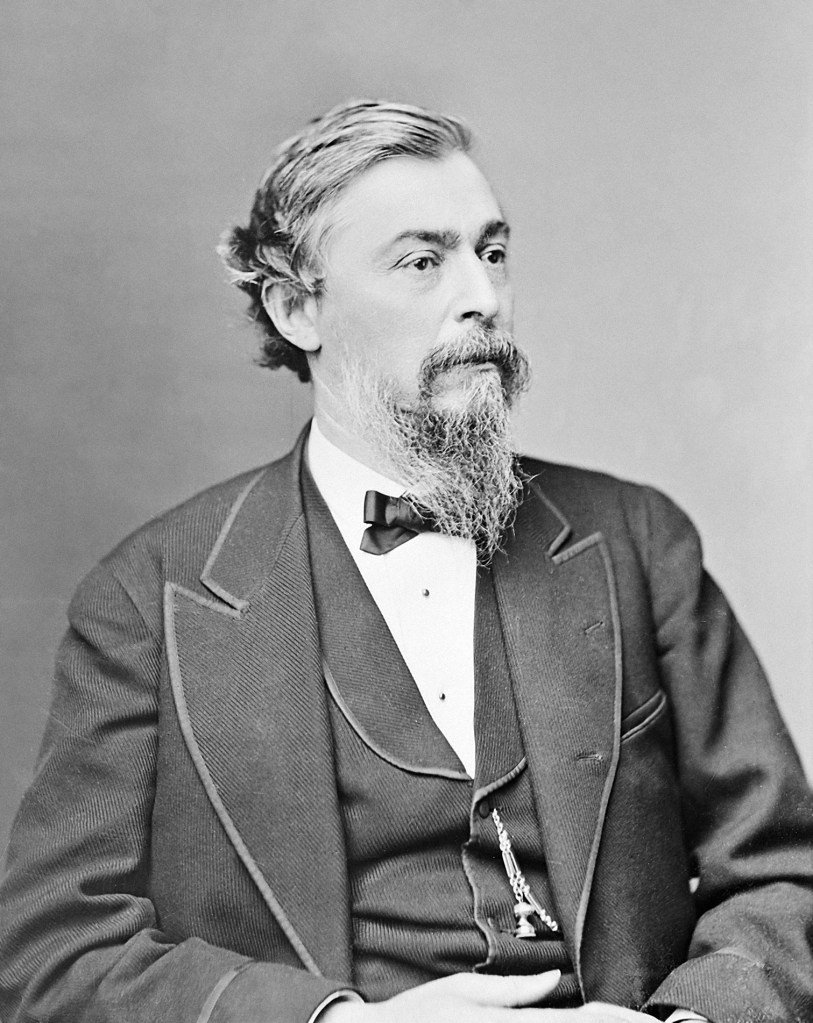
Meanwhile, Dr. Thomas Durant, by illegally purchasing shares under other names, obtained complete control of the Union Pacific Railroad Company in Omaha. Durant also illegally set up a company, guaranteeing him and other investors risk-free profits from the construction of this railroad. Richard White, author of Railroaded:The Transcontinentals and the Making of Modern America, stated, “They put little of their own money in it —they didn’t have much. It was built on land grants, government loans, and government guaranteed bonds. When their loans came due, they refused to pay and the government had to sue. In effect, they stumbled into a business model where the public takes the risk and those taking the subsidies reap the gain.”
Although work began in December of 1863 under Thomas Durant, very little would actually be accomplished until after the end of the Civil War in 1865. It wasn’t until General Grenville Dodge, of the Union Army, took over as the Chief Engineer of the Union Pacific in 1866 that westward progress finally began to occur. It continued rather quickly despite attacks from the Native American populations of Sioux, Arapaho and Cheyanne tribes. In contrast, the Central Pacific crew, faced with the most difficult section made slow advancements through the Sierra Nevada Mountains.

By 1865 the Central Pacific Railroad struggled to maintain an efficient workforce due to the brutal demands of the labor required to get through the Sierra Nevada Mountains. They began hiring a Chinese work force and discovered they were an efficient and tireless manpower. Ultimately, they had a labor force of over 20,000 Chinese, which was 90% of their laborers. They paid them less than their white counterparts working on the Union Pacific Railroad. Additionally, they accomplished the most difficult work by carving 15 tunnels up to 1,600 feet in length with hand tools and black powder. At one point they laid 10 miles of track in one day.
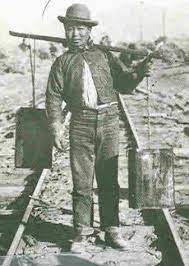

By contrast, the labor force of the Union Pacific Railroad consisted of Irish immigrants and Civil War veterans.
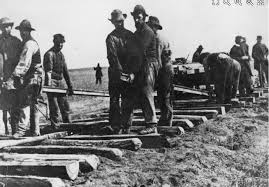

Steam engines need to fill up with water every 100 miles of track. Across the plains, ramshackle settlements popped up along the train lines. These became hotbeds of drinking, gambling, prostitution and violence, perpetuating the mythology of the “Wild West.” As one drives across stretches of Wyoming today, these same settlements (towns) exist spaced 100 miles apart, although they have become more civilized and have lost the Wild West syndrome from their past.
As the Union Pacific laid tracks in their westbound journey, it could not be disputed they increased commerce to those areas, but they also destroyed forests in their quest for timber to build railroad tracks and trestles. In addition, the trains allowed easy access by hunters, who demolished herds of buffalo.
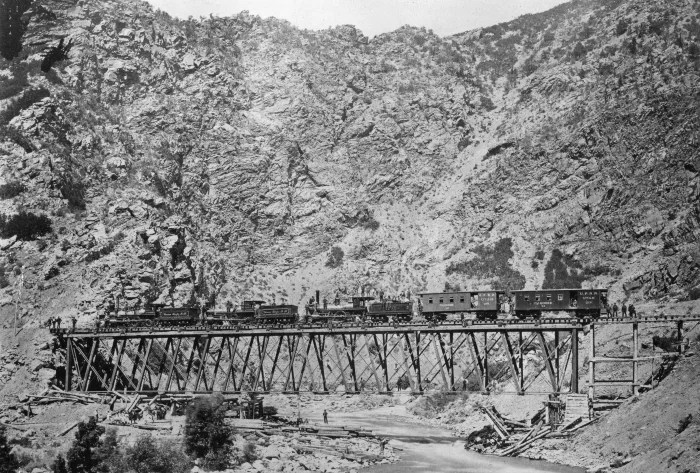
By early 1869, the two railroads were within miles of each other. Continuing onward, each Railroad actually passed the other building side by side going in opposite directions, all while garnering Federal funding. In March, President Grant announced he would withhold federal funds until the two companies agreed on a meeting point. After laying track through Ogden by Union Pacific, Promontory Point became the agreed location. 690 track-miles from Sacramento had been laid by the Central Pacific Railroad and 1,086 from Omaha by the Union Pacific Railroad.
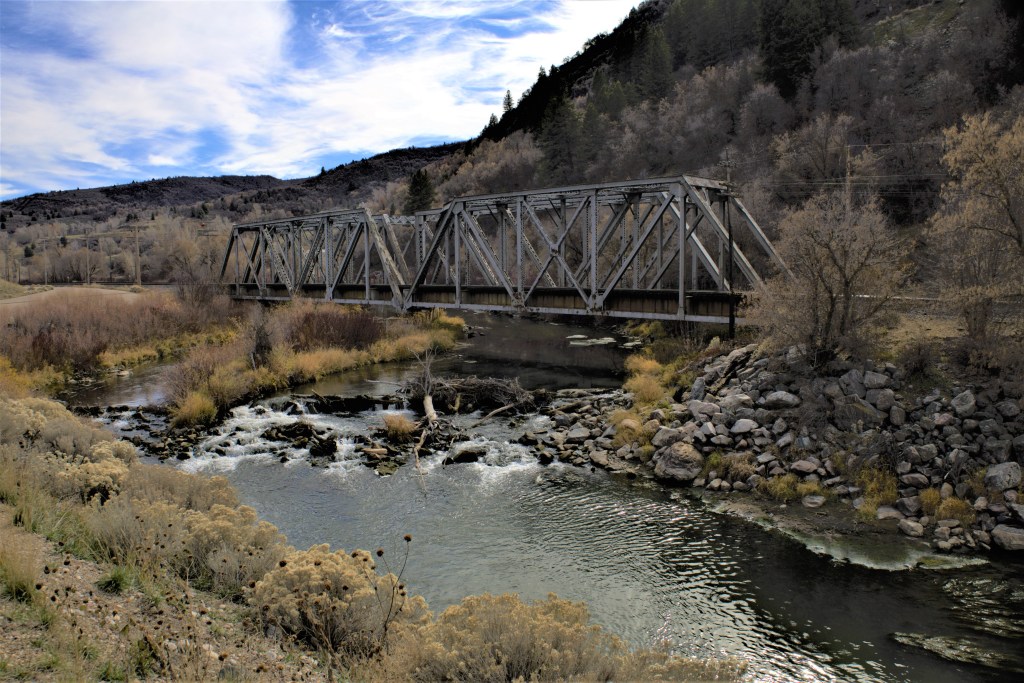
The ceremony marking the joining of the two railroads at Promontory Point in Utah was conducted on the 10th of May in 1869. A golden spike was placed, signifying the joining of the two railroads together. Leland Stanford, of the Central Pacific made the first strike; missing the spike. Next was Thomas Durant of the Union Pacific, who also missed the spike. The actual placement of the spike in the rail was accomplished by an unknown railroad worker. The spike was then removed and an iron spike put in its place. The original golden spike is now part of the collection of Stanford University, which was founded by Leland Standford and his wife, Jane, in 1885 in memory of their son.
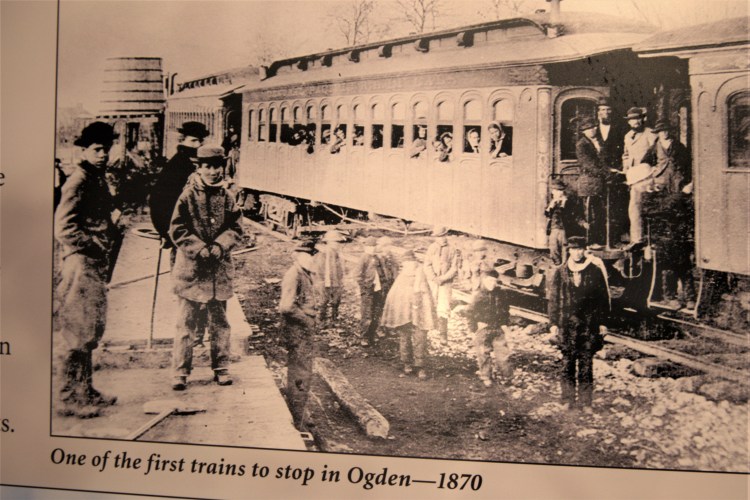
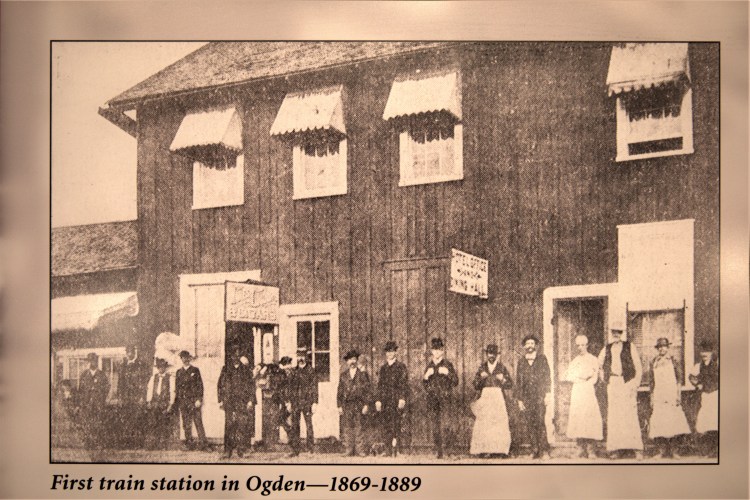
Initially, Brigham Young was upset the railroad didn’t go through Salt Lake City. General Grenville Dodge surveyed the area and concluded going to Ogden was the better option. Brigham Young ultimately donated 175 acres in Ogden, also named Junction City, on the condition that the yards and station be built in West Ogden. These factors and the availability of fresh water decided the location of the major station hub. The first train station was built in 1869 on the banks of the Weber River, however patrons complained of walking a half mile over a boardwalk to reach the train station. The Union Pacific and Central Pacific launched a joint venture to build a new rail station, calling it Ogden Union Railway & Depot Co. (OUR&D).
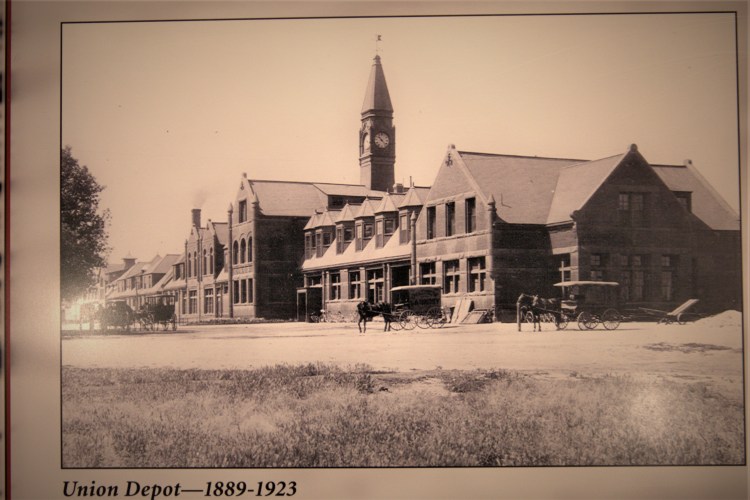
Located at the West end of Ogden’s historic 25th Street, and completed in 1889, this new structure was designed in the Romanesque Revival Style, with a large clock tower in the center. Considerably larger than the old two-story wooden station and constructed of brick, it held 33 hotel rooms, a restaurant, barbershop, and other conveniences for travelers.
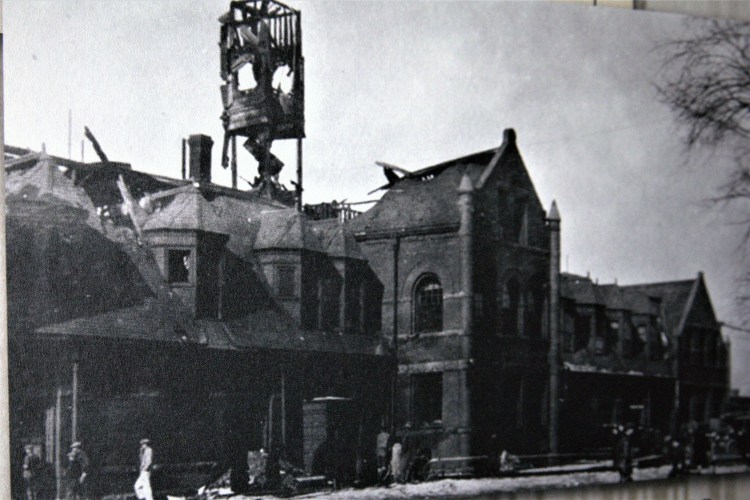
Unfortunately, it burned down in 1923 after someone ironing shirts in a hotel room left the iron unattended. It fell on the floor and caught fire destroying the station’s interior leaving the walls and clock tower in a fragile state. No deaths or injuries were reported during the initial fire. Work continued inside the first floor to some extent, but construction on a new building did not start until a stone from the clock tower fell and struck a railroad clerk, killing him instantly.

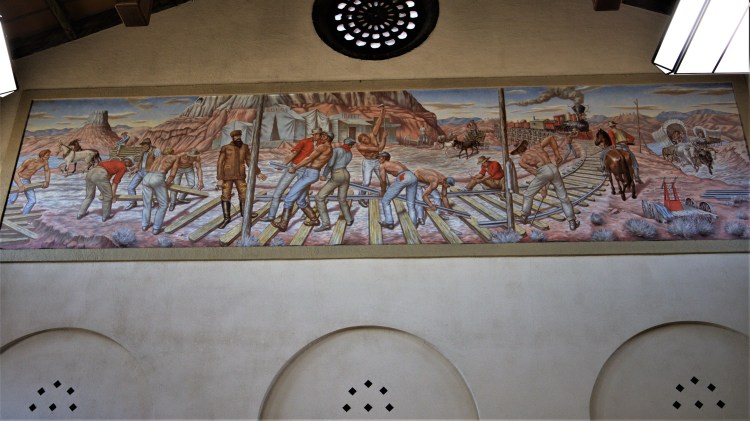
On November 22, 1924 construction of the current building upon the foundation of the previous building was completed in the Early Christian/Byzantine style. Named Union Station, Murals of the construction of the Transcontinental Railroad were painted on the north and south ends of the lobby.
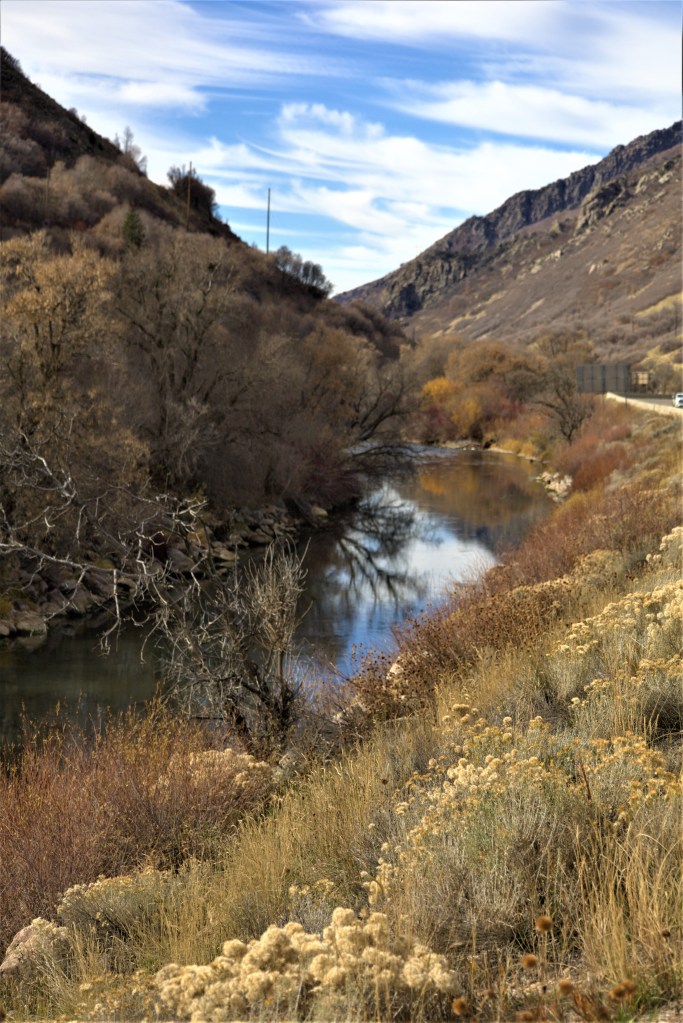
Although at its height, 100 passenger trains passed through Ogden daily, the building is no longer used as a working train station. It was turned over to Ogden City on a 50-year lease in 1977. The station building now houses the Utah State Railroad Museum, John M. Browning Firearms Museum, The Browning-Kimball Classic Car Museum, the Western Heritage and Utah Cowboy Museum, and a library and archives. It plays host to various conventions and events, including the annual Hostlers Model Railroad Festival, weddings, Ogden Marathon Expo, craft and bridal fairs.

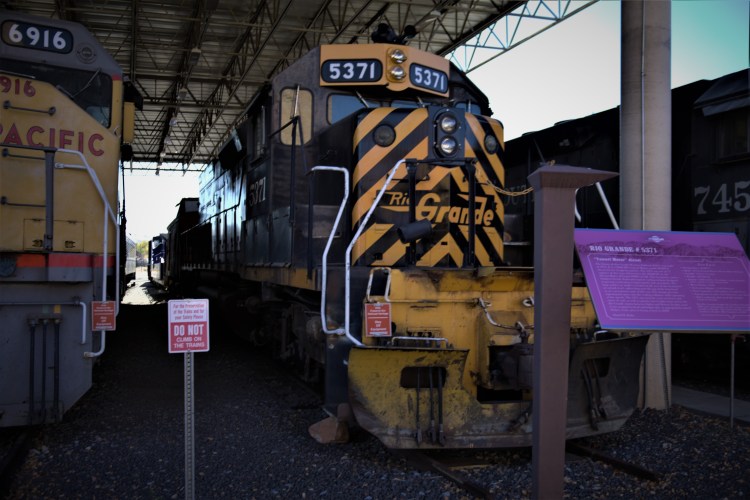
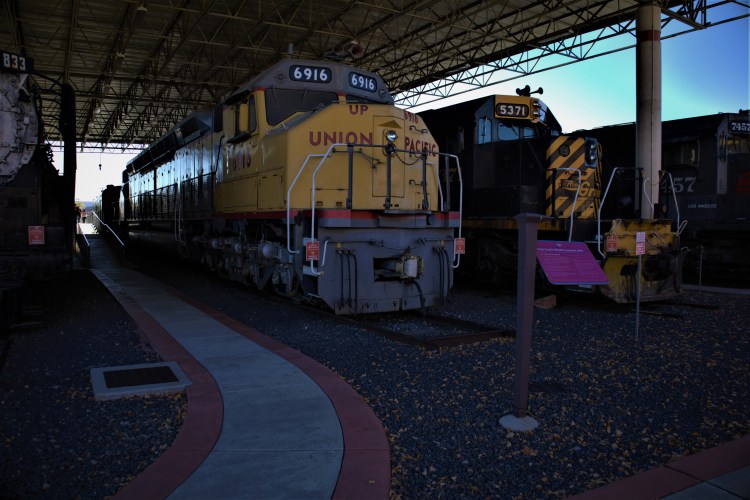
The transcontinental rail lines still exist to the West of Union Station, with Promontory Summit marking the culmination of arguably one of the most important feats in America’s history. The completion of the transcontinental railroad – where East met West. Today, Utah is a vital crossroads for Union Pacific. Main lines radiate in every direction moving metals, minerals, manufactured products, coal, automobiles and other commodities.
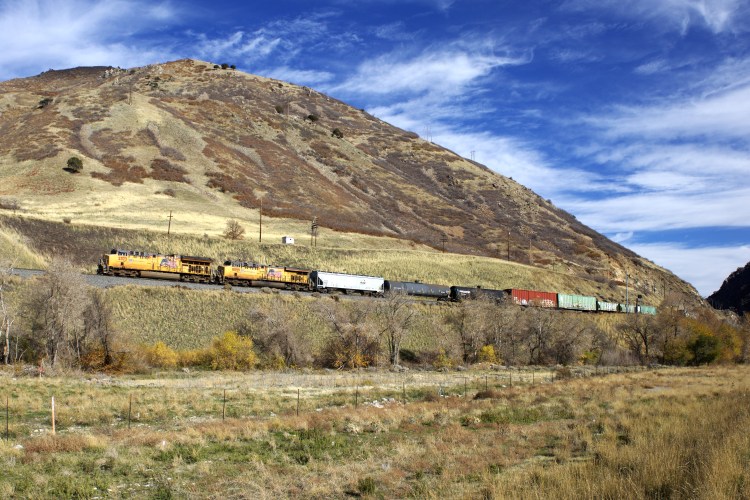
Union Pacific Utah stats for 2020 state that the number of rail cars originating in Utah were 240,254. The number of rail cars terminating in Utah were 222,078. The top 5 commodities shipped by volume were coal, hazardous waste, inter-modal wholesale, metallic minerals and non-metallic minerals. The top 5 commodities received were automobiles, coal, hazardous waste, inter-modal wholesale and lumber and building materials. Union Pacific has an annual payroll of $103.5 million, with in-state purchases totaling $128.9 million, a capital investment of $66.2 million and community giving equaling $575,597. One hundred and fifty-two years since arriving they are still playing a vital role in Utah’s history and economy.
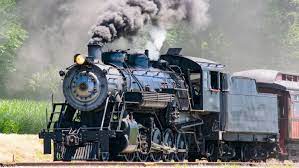
This wraps up the 2nd iteration of my series of articles about Ogden. Up next I plan to write about Ogden’s Historic 25th Street. It has a somewhat sordid past with stories about gambling, prostitution, underground tunnels used for smuggling during Prohibition, ghosts and more. What’s fact and what’s fiction? I hope to find out.
Sources:
Wikipedia
History Channel Articles:
Transcontinental Railroad – Construction, Competition & Impact
Transcontinental Railroad Completed, Unifying United States
The Transcontinental Railroad United America
United States Railroad Museum located at Ogden, Utah
The History of the North American Rail by Christopher Chant
Ogden Junction City by Richard C. Roberts & Richard W. Sadler
 Life is an Adventure
This is absolutely great article. I enjoyed reading about past history of our beautiful state.
LikeLike
Thank you for your kind words.
LikeLike
Wow,great reading
Thank you for capturing our imagination
LikeLike